
What I Almost Missed by Focusing on His Behavior
When Bohdi was a puppy, stealing my socks was a morning game.
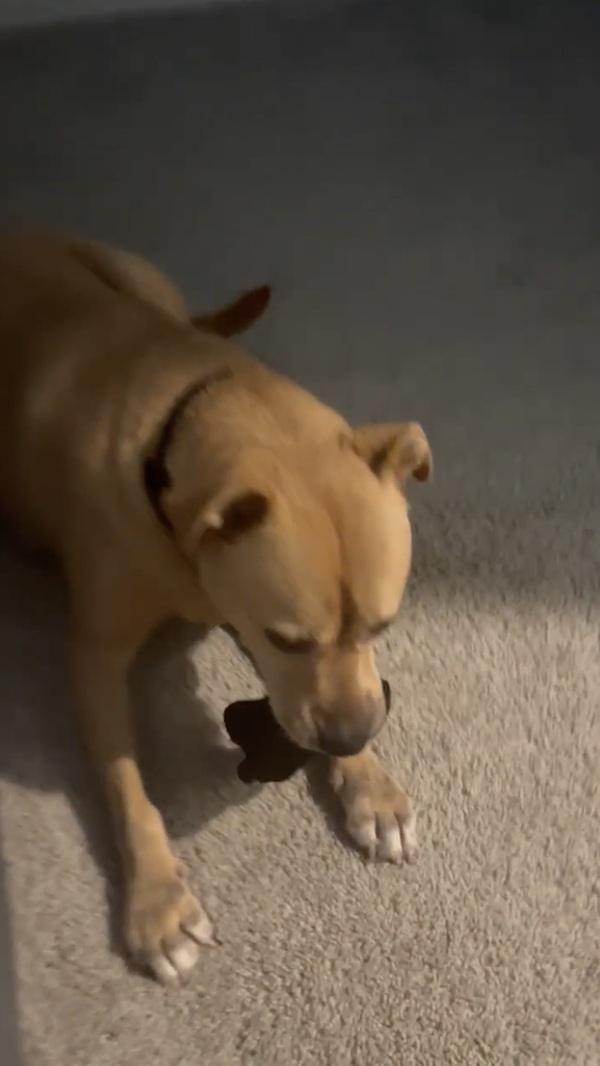
He’d sneak into my bedroom while I was in the kitchen, grab a sock and quietly make his way into the living room. Then he’d crawl under the coffee table and wait.
He wouldn’t make a sound.
Eventually I’d notice him under there, and his tail would start wagging.
“What do you have?”
More tail wagging.
That was usually all the confirmation I needed. He had something he wasn’t supposed to have.
I’d kneel down. “Hey, give me that!”
Bohdi would tuck the sock a little closer to himself.
“Give.”
If I reached toward it, he’d growl and guard it. I didn’t feel comfortable simply reaching under the table and taking something from a puppy who was warning me not to. So I’d head back to the kitchen, grab a treat or a piece of food, come back where he could see it and say, “Trade.”
He’d drop the sock for the food.
Then I had approximately three seconds to retrieve the sock before Bohdi grabbed it again and won the game.
At the time, I knew I had a problem. I was essentially giving my dog something delicious after he’d stolen something he wasn’t supposed to have. But I also didn’t want our mornings to turn into a battle over a sock.
That’s part of what led me to look for something else Bohdi could do—something he’d find even more interesting than stealing my laundry.
Eventually, I found a food-dispensing ball.
And much to Bohdi’s disappointment, his career as a professional sock thief finally had some competition.
I Thought Dogs Just Needed “A Job”
I’d always heard that dogs needed a job, and puppy Bohdi certainly seemed determined to prove that theory.
At the time, I didn’t work from home. Bohdi had what felt like an endless supply of puppy energy, and I needed to find ways for him to use some of it that didn’t involve my socks or shoes.
So when I found the food-dispensing ball, I put some food inside and gave it to him.
I didn’t really have to teach him what to do.
He instinctively started pushing the ball around with his nose. Eventually, a piece of food fell out. He ate it, pushed the ball again and another piece came out.
Bohdi had cracked the code.
Before I knew it, he was flying around the house pushing this ball with his nose, chasing it wherever it went and collecting the pieces of food that dropped along the way.
And I thought I’d hit the jackpot.
It kept him busy. He was having fun. He wasn’t stealing my socks. And when the ball was finally empty, he’d lie down and take a nap.
It was like heaven to a busy dog mom.
I didn’t know anything about enrichment at the time. I wasn’t thinking about problem-solving, natural behaviors or mental stimulation.
I just knew I’d found something my energetic puppy loved to do—and afterward, he was ready to rest.
What started as a way to keep Bohdi busy would eventually change the way I thought about many of the things I was already doing with my dogs.
I Didn’t Realize I Was Learning About Enrichment
As I learned more, I discovered that what I was doing with Bohdi had a name: enrichment.
At first, I thought enrichment mostly meant keeping a dog entertained. But the more I learned, the more I realized there was more to it than that.
Dogs experience the world differently than we do, and many of the things they naturally want to do—sniff, search, chase, chew, shred, play and figure things out—can give us clues about the kinds of activities they may enjoy.
Enrichment gives dogs safe and appropriate opportunities to use some of those natural behaviors.
And it doesn’t necessarily require buying another dog toy. Sometimes it’s simply giving a dog an appropriate opportunity to do something they already enjoy doing.
Looking back, that little food ball gave puppy Bohdi several things he seemed to love all at once. He could chase it, push it around, figure out how to get the food out and then get rewarded when he succeeded.
I hadn’t deliberately designed an enrichment activity around my dog’s natural behavior.
I’d stumbled into one because I was trying to save my socks.
And that discovery eventually changed the question I asked when one of my dogs started getting into something.
Instead of only asking, “How do I make them stop?”
I started asking something else:
What are they trying to tell me?
I may not always know the answer. But asking the question makes me stop, pay attention and get curious about what my dog might need in that moment.
Your Dog Might Already Be Showing You What They Enjoy
Asking “What are they trying to tell me?” doesn’t mean I always know the answer.
I don’t.
But I’ve gotten much better at noticing my dogs’ cues.
Sometimes they’ll start following me around. One of them might whine. Bohdi might steal something he knows he’s not supposed to have. Other times, Bohdi and Aurora will start roughhousing.
Roughhousing is part of how they play, and I don’t want to stop them from being dogs. But I also know my dogs well enough to recognize when their excitement is starting to build and it’s probably time to change things up.
That’s when I start thinking about what might work in that moment.
Maybe they need something to do on their own. Maybe what they’re really looking for is interaction with me. Other times, simply going outside for a little while and changing their environment seems to be what they need.
None of it has to become a major production. Sometimes whatever we do lasts only a few minutes.
I’ve learned to think of it almost like a conversation:
Notice. Consider. Offer. Observe.
Notice what my dogs are doing.
Consider what might be appropriate in that moment.
Offer them an option.
Then observe what happens.
Sometimes I get it right. Sometimes they’re not interested and I try something else.
The important part isn’t learning a formula where one behavior always means one particular thing. It’s learning to pay attention to the individual dog in front of you.
Bohdi and Aurora can’t sit me down and explain what they need.
But they’ve gotten pretty good at making sure I’m paying attention.
Enrichment Isn’t a Magic Wand
I wish I could tell you that seven years of learning about enrichment means Bohdi no longer steals my socks.
It does not.
If I leave a sock somewhere he can find it, there’s a pretty good chance we’re going to play the exact same game we played when he was a puppy.
“What do you have?”
Tail wag.
Busted.
The difference is that I understand him better now.
Enrichment didn’t magically train every unwanted behavior out of my dog, and I don’t expect it to. Bohdi still loves stealing things. He loves chewing. And perhaps more than anything else, he loves shredding things into as many tiny pieces as possible.
So I give him appropriate outlets for some of those behaviors—and I still pick up my socks.
Because understanding why a dog enjoys doing something doesn’t mean it’s safe to let them do it.
That’s particularly true in our house. Bohdi thinks a sock is a fantastic opportunity to start a game. Aurora has actually swallowed socks before.
Same sock. Two very different dogs. Two very different risks.
So when a sock appears, the game ends and the sock gets put away.
That’s been another part of this journey for me: enrichment and management work together. I can better understand why my dogs might enjoy certain things while still setting boundaries around what is safe.
And there are situations that need more help than enrichment can provide. Aggression, serious guarding, swallowing things that aren’t food or other safety concerns may mean it’s time to talk with a veterinarian or qualified behavior professional rather than trying to solve the problem with another activity.
Enrichment is one tool in the toolbox.
And for me, its biggest value may be that it taught me to look at my dogs a little differently.
We’re Still Figuring Each Other Out
Bohdi is still Bohdi.
He still steals my socks if I leave them where he can find them. He still loves to shred things. And he still has days when he seems determined to find his own entertainment.
I’ve changed more than he has.
Enrichment can’t take the dog out of the dog.
I don’t think I’d want it to.
What it has given me is a better understanding of the dog sharing my home—and more ways for us to live together without expecting him to stop being who he is.
I’m certainly not a perfect dog owner. I didn’t know any of this when a little puppy first crawled under my coffee table with one of my socks.
I just knew I loved him, and I wanted to figure out a better way for us to live together.
I guess we’re both still finding our way along the path.
—————————————-
Now I have to know: what has your dog taught you? And please tell me Bohdi isn’t the only sock thief out there. 😂 Share your story below—I’d love to hear it.